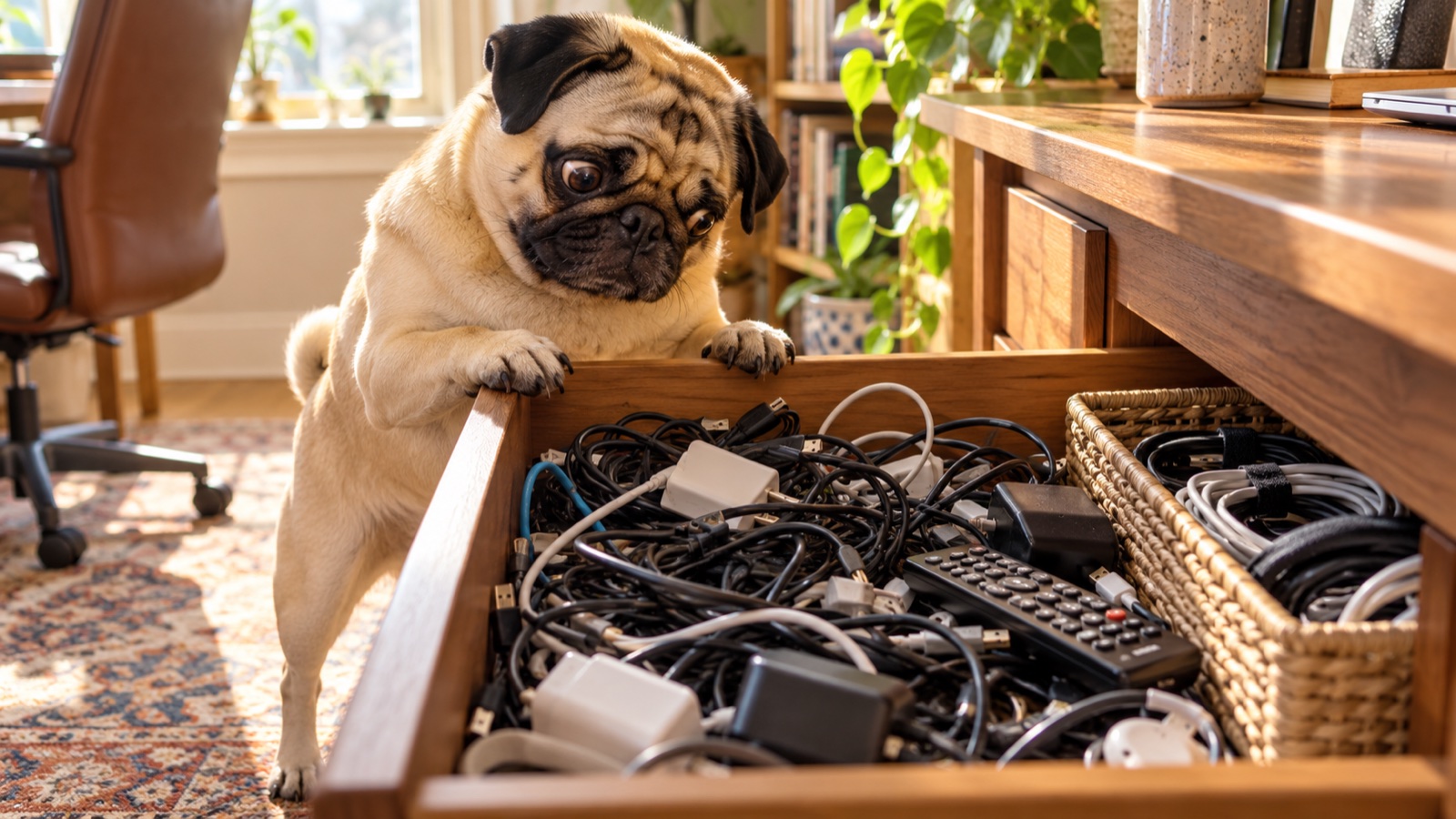

My human opened the drawer looking for a charger. Out came a knot of cables, an old remote, two rubber bands, and the emotional history of consumer electronics. Somewhere inside was the one cable we needed. Somewhere else was a charger for a phone that retired before I was born.
Naturally, the conclusion was that we need more storage. I am Pug DJ, and I have a different theory. Perhaps the drawer is full because it contains the belongings of seven devices that no longer live here.
The cable protection program
Every cord has a defense lawyer. “We might need that.” For what? “Something.” When? “You never know.” This is a strong argument because it does not require evidence. Under this rule, we should also keep every empty yogurt container and the box from the toaster forever.
Being prepared is useful. Keeping a few spare cables you can identify makes sense. Keeping a tangled shrine to every plug your family has ever owned makes finding the useful ones harder. Preparedness should help you solve a problem, not hide the answer in a nest.
Start with one drawer
Do not empty the entire house onto the floor. That is how a tidy-up becomes a three-day event with takeout and hurt feelings. Pick one small space. Set aside a short stretch of time. Finish that space before inviting the garage into the conversation.
Take out the contents where you can see them. Keep pets away from the pile and put small parts somewhere secure. I am happy to supervise from a comfortable distance. My contract does not cover untangling, and I do not have the necessary thumbs.
Give each cable a real job
Match it to a device you still use. If you find the answer, label it in a way future-you will understand. “Desk lamp” is helpful. “Important cord” merely gives the mystery a promotion. Group the useful spares so they are easy to find without pulling everything apart.
Check with other people in the household before removing anything that might be theirs. That strange cable may have a perfectly good job you do not know about. A five-second question is better than a long apology after somebody’s work equipment stops working.
Let “I don’t know” have a deadline
Put truly unknown items in a small, dated holding box. Choose a day to review it. If you identify a needed item, give it a home. If not, decide what can go rather than quietly moving the same puzzle into a bigger container.
For old electronics and unwanted cords, check your local recycling options. Donate items only if they are usable and accepted. Other people do not need to inherit a bag of your unanswered questions. The goal is a useful second life where possible, not a new address for the clutter.
Enjoy the space you already have
A cleared drawer will not solve every storage problem. Some homes really do need more room. But it can show how much space is occupied by postponed decisions. Even a small improvement means less digging and fewer lost minutes.
We eventually found the charger. It was plugged in beside the couch. The drawer still needed work, but I considered this an important finding.
Before you shop for another organizer, open one drawer. You may discover that the extra room you wanted was hiding under a charger for a camera nobody remembers buying.