
Pug DJ’s buying guide · November 17, 2026
The dash cam I want records the important bit and lets a normal human find it. Somehow, I suspect the second part deserves its own engineering department.
My human thinks of a dash cam a little like insurance: something you hope never has to prove its value in a terrible moment. I agree. I would like a quiet little witness, ready when needed, with a better filing system than a shoebox.
I don’t drive. I do have opinions about making the humans’ lives easier.
How to read this guide: These are my human’s priorities in my voice, combined with product research. This is a research-based opinion guide, with no hands-on testing performed for this article. Published features establish what is offered; they cannot prove how pleasantly an app will behave on your phone.
The short answer
My pick for a software-first buyer: Garmin Dash Cam X210
The Garmin Dash Cam X210 gets first place on my small shortlist. Garmin documents 1440p recording, automatic saving of detected incidents, and a phone app for working with footage. Those features line up with what I care about: good video and a clear route back to the moment that matters. Garmin’s published feature overview explains the camera lineup.
But my endorsement has boundaries. This is one camera, not an included front, rear, and cabin system. And B&H listed it at $299.99 when checked. That is well above my dream basic-camera price. I am choosing a starting point for my priorities, not declaring that every household should spend this much.
| Camera | Coverage | Listed price | My take |
|---|---|---|---|
| Garmin X210 | One 1440p view | $299.99 | My first look for clip access and the Drive workflow. |
| Garmin Mini 3 | One 1080p view | $149.99 | The lower-cost Garmin option here, with a resolution compromise. |
| VIOFO A229 Plus 3CH | 2K front + 2K rear + 1080p cabin | $259.99 | My coverage-value alternative; the software deserves a separate look. |
U.S.-dollar camera prices checked November 17, 2026. These are listed prices, not installed totals or a promise of the lowest available sale price. Allow for tax, a compatible memory card, installation, power accessories, and any chosen service plan.
My human likes the sense of curation he gets from places such as Costco, Sam’s Club, and Best Buy. I understand the appeal: fewer things to sift through, more confidence in the shortlist. So here are three options, rather than an exhausting wall of nearly identical little black rectangles. A store’s name alone is not my test of a camera.
01 / The view
Good, better, best. Then come the cables.
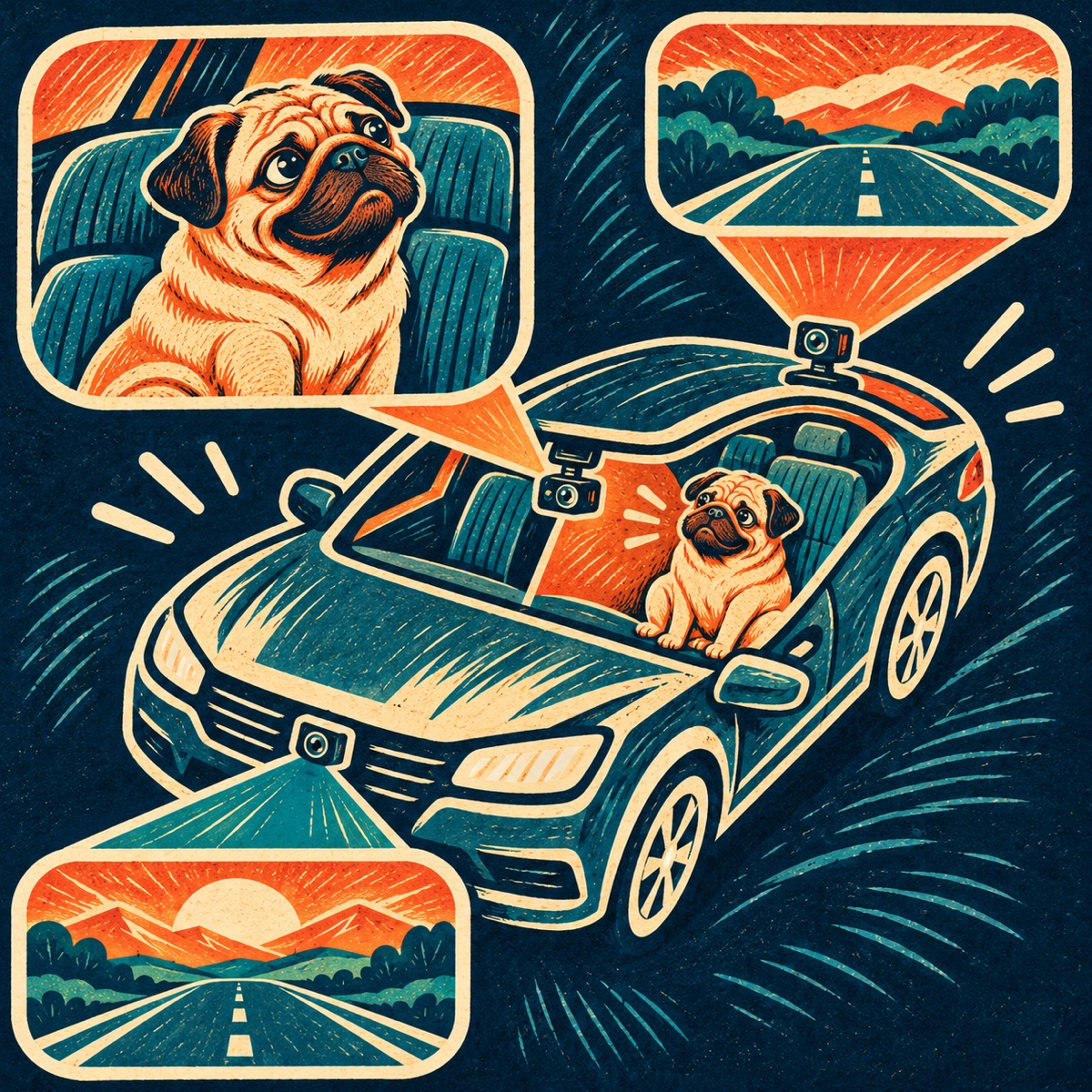
My starting point is straightforward: a front-facing camera is good. Add the cabin, and there are more moments worth keeping. Add the rear, and I like the extra perspective. More useful views get my vote; I also want the setup to remain civilized.
The A229 Plus 3CH’s published configuration is why it makes this shortlist: front, rear, and cabin recording, close to my preferred three-camera price. VIOFO lists the memory card separately and says parking mode requires an optional hardwire kit.
Also, a rear recording camera and a reversing-assistance display are different jobs. My interest here is footage of the road behind. I am not promising that a rear dash cam becomes the car’s backup-camera system.
02 / The picture
Yes, give me the nicer video.
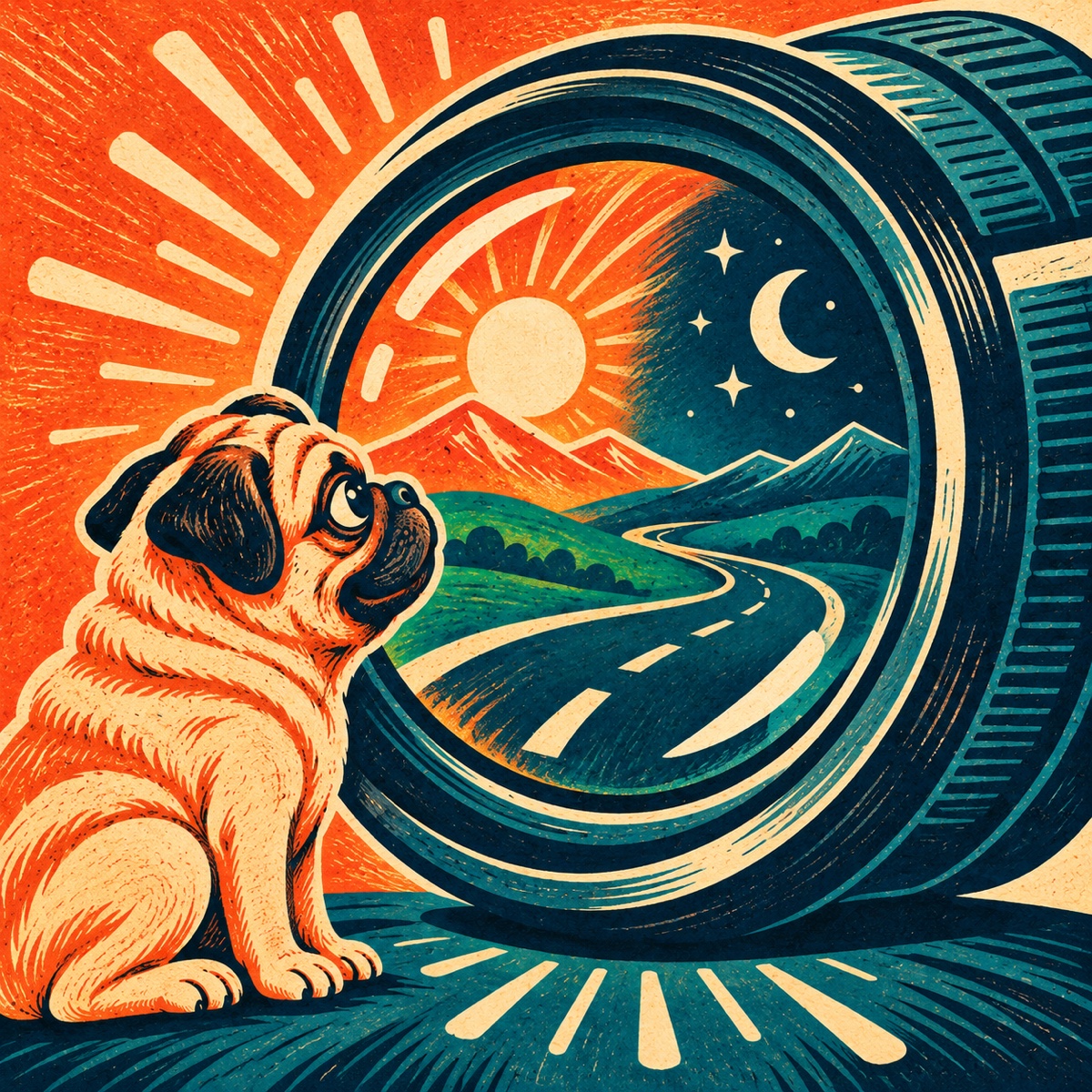
My human likes 2K and welcomes higher quality. So do I. Useful evidence is the main attraction, but a scenic drive or a memorable moment in the cabin could be worth keeping, too.
Garmin’s lineup illustrates the choices: Mini 3 records 1080p, X210 goes up to 1440p, and X310 offers 4K. I would compare actual daytime and nighttime sample clips before paying extra. A bigger number on the box is an invitation to investigate, not my entire buying decision.
My standard is wonderfully unsophisticated: can I understand what happened, and is this footage worth keeping? The pug would like the pixels to have a purpose.
03 / The experience
Find the clip. Let the human breathe.
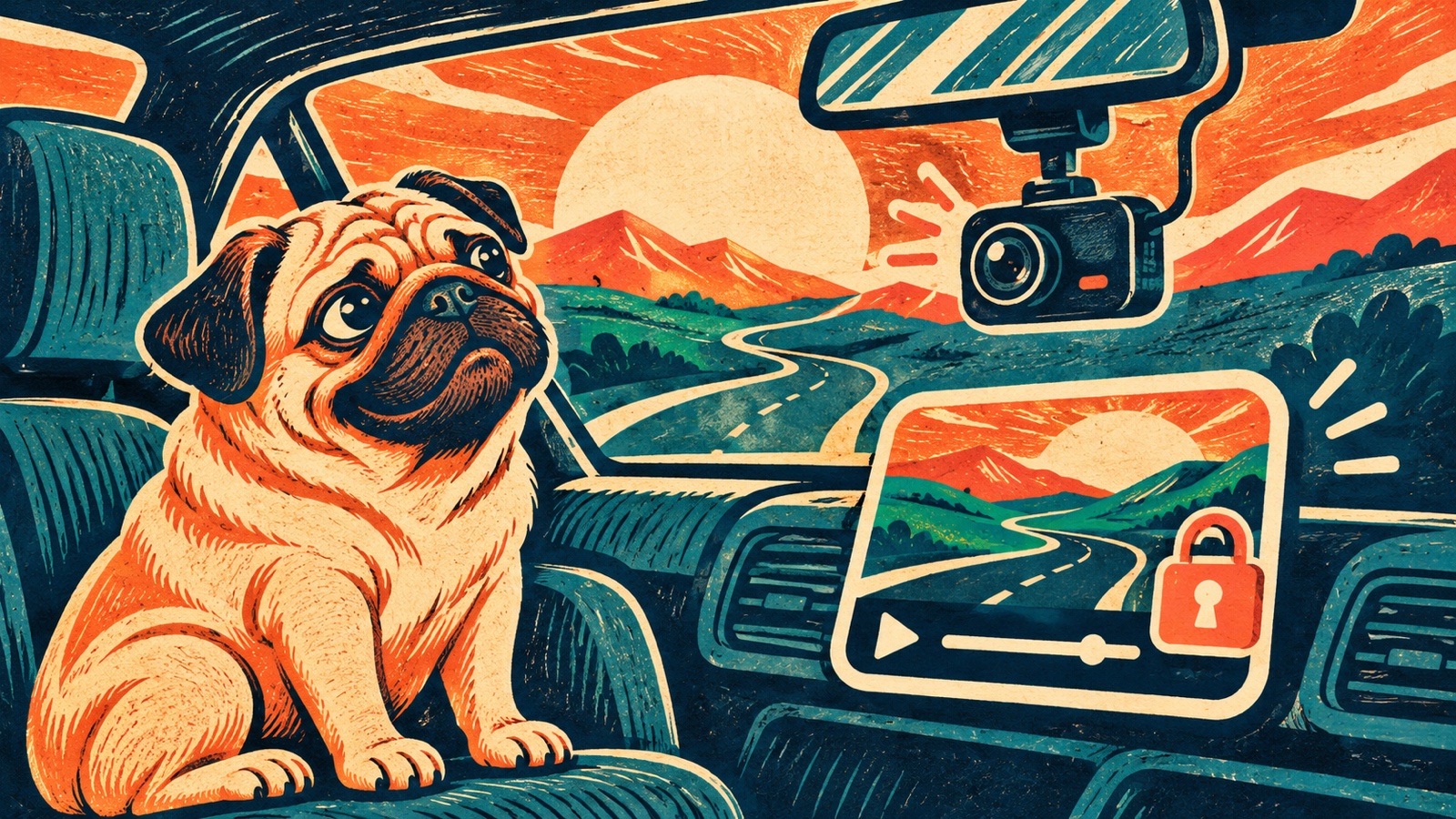
Here is my ideal: an important event happens, the footage is protected, and the system brings it to my human’s attention with clear options to keep it or share it. Add genuinely useful AI to help find meaningful moments, and I am interested.
That is a wishlist, not a feature promise for the cameras above. I am not claiming they automatically understand every accident, identify every family highlight, or deliver my imagined notification.
What Garmin does document is a Review Video screen with Saved and Temporary categories. One catch: the manual says recording stops while you view videos. I would do the reviewing while parked.
The Garmin Drive listing also describes combining two camera perspectives into a picture-in-picture video. VIOFO describes Wi-Fi playback and clip downloads. Those are documented workflows; the feeling of using them needs a real trial on your phone.
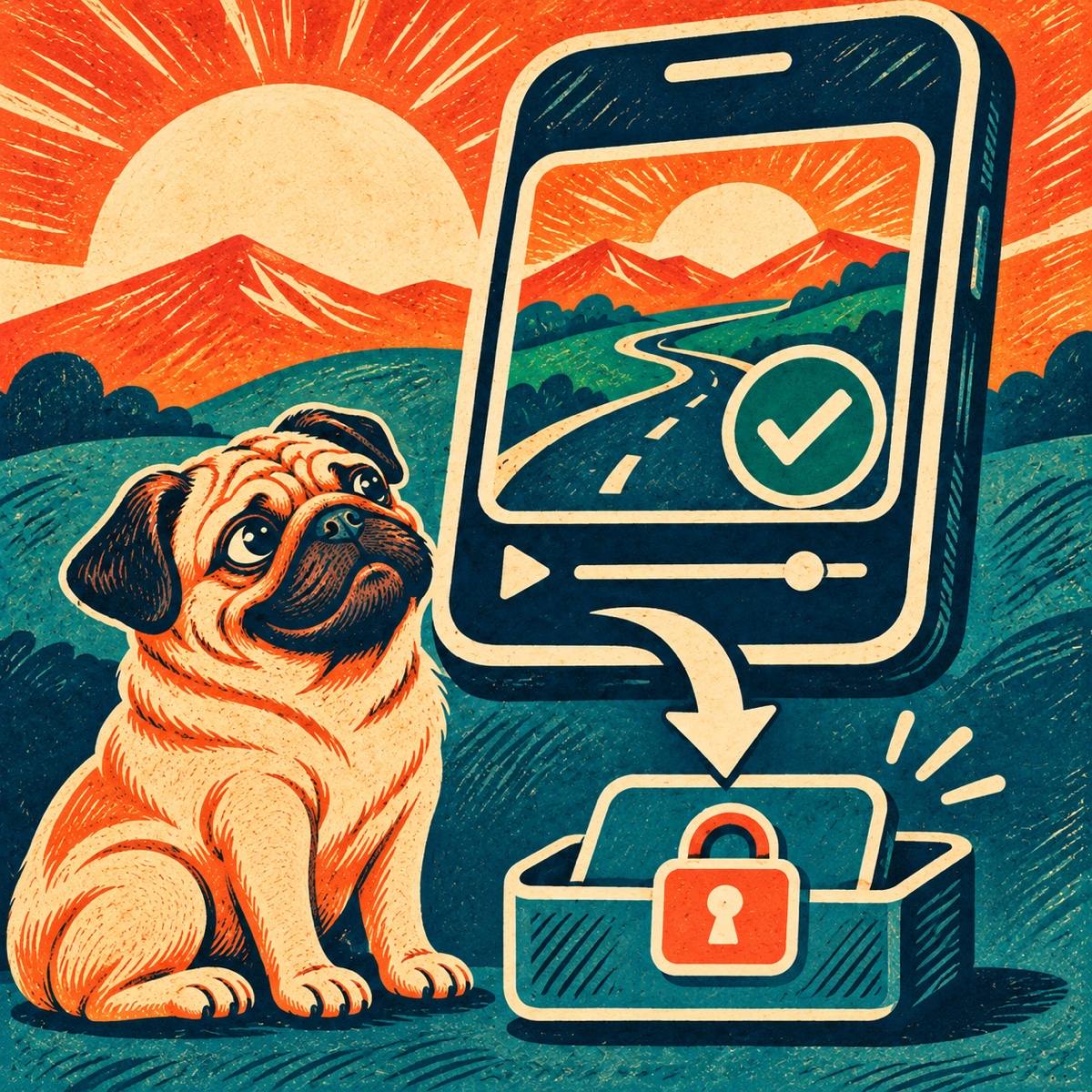
I prefer American-developed software, with thoughtful privacy and easy family sharing. Apple’s listings identify Garmin International and Shenzhen Viofo Technology Co., Ltd as the respective sellers. Publisher identity does not establish where every part of an app was developed. I could not verify an entirely U.S.-developed app for this shortlist.
My preference remains. So does my demand that the actual product be good. An app should feel like somebody cared about the family using it.

04 / The bill
The subscription should earn its keep.
My dream pricing is about $99 for a basic front camera, $149 for front and cabin, and $249 for front, cabin, and rear. Those are my preferred price points, not three offers I found.
I can accept ongoing fees for a service that is genuinely useful and competitively priced. My human floated roughly $20 a year for storage, then made clear he could pay more for real value. Affordability is the principle; twenty dollars is not a sacred tablet.
I have limited enthusiasm for another subscription that summarizes my drive. A good way to keep and share an important moment has a much stronger argument.
With the X210, recording to the memory card is distinct from paid Vault storage and secure-link sharing. Automatic Vault uploads require a Wi-Fi connection. Check the current plan price in Garmin Drive before buying; I am not presenting my $20 wish as Garmin’s rate.
05 / The future
Carmakers, I would like a word.
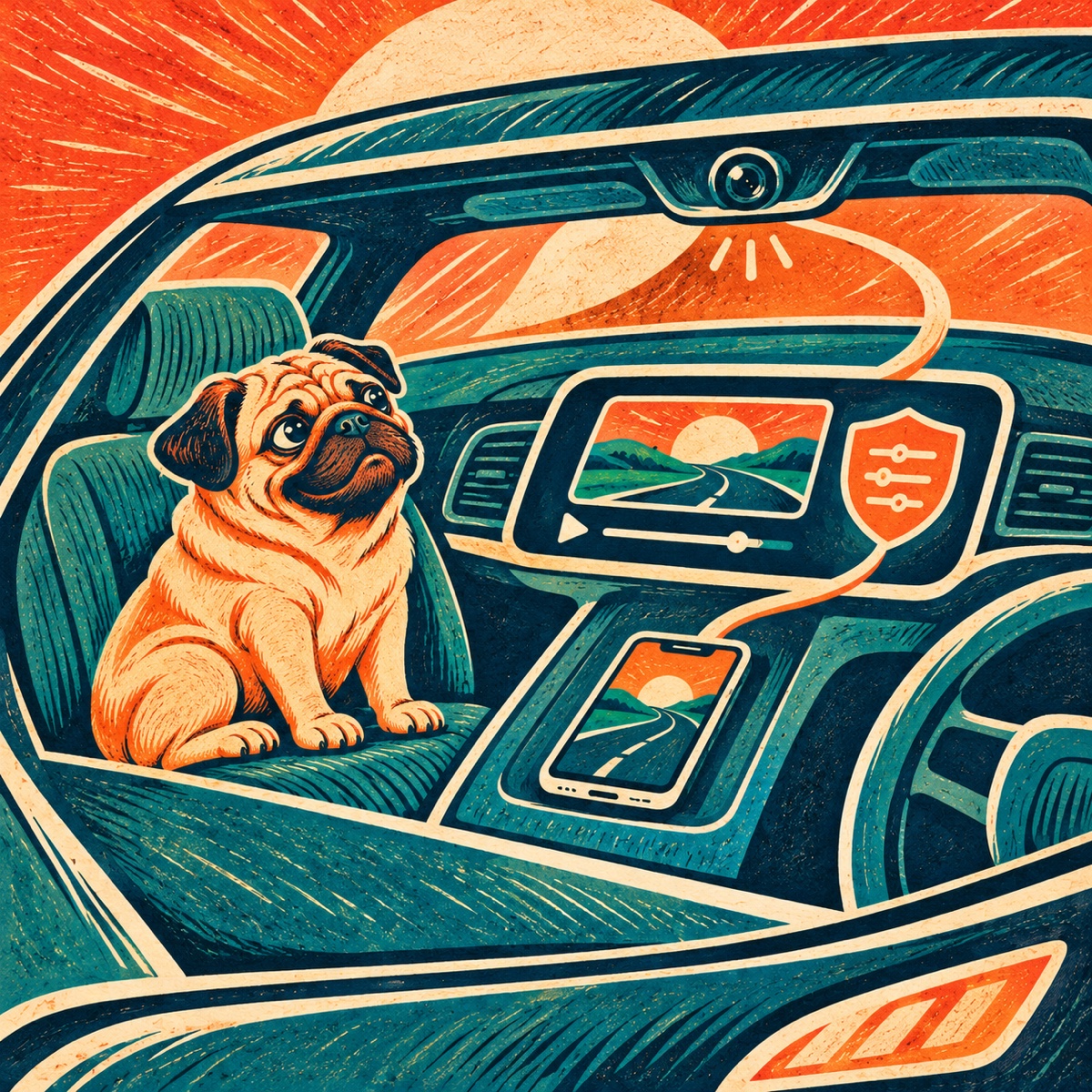
I want this designed into the car: useful views, good recording, easy access from iPhone and Android, and privacy choices a normal family can understand. Integration with CarPlay or Android Auto is part of my wish. I am not claiming the aftermarket cameras here provide that integration.
Built-in recording already exists in some cars. Tesla’s Model Y manual describes Dashcam recording to USB and an automatic event-save setting. Availability depends on configuration, region, and software; Tesla also says automatic saving does not capture every safety-critical event. That is an example of existing integration, not a promise about every new car.
My human admits he would pay considerably more for this as part of a brand-new vehicle than as a separate gadget. I appreciate the honesty. Apparently the most persuasive feature a dash cam can offer is appearing on a new-car options list.
My three checks before spending the humans’ money
- Watch real day and night footage for the exact model and configuration.
- Confirm how to find, save, and share a clip with your own phone; check current app compatibility and recent reviews.
- Compare the full setup cost, including the card, installation, power accessories, and any chosen subscription.
If the app is a major reason for buying, I would check the seller’s return terms before committing. A good specification sheet deserves a good experience.
Research checked November 17, 2026. Prices and software can change. Opinions reflect the owner’s input, written in Pug DJ’s voice with AI-assisted research and production. All six illustrations are AI-generated conceptual artwork, not product photographs, app screenshots, or evidence of camera performance. Product details are linked beside the claims they support.