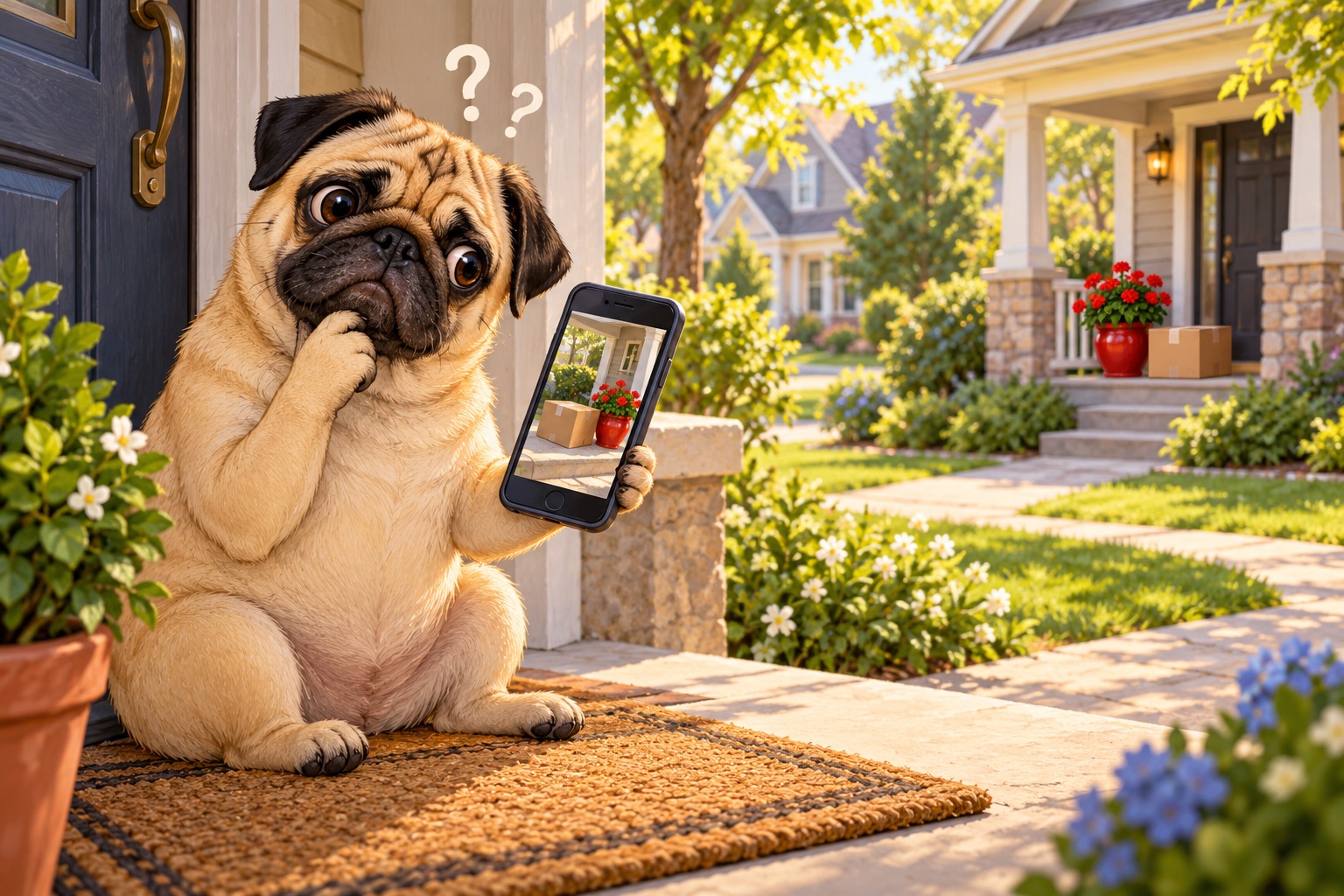

Dear delivery companies, Pug DJ here. My human received a cheerful message announcing that our package had been delivered. The message sounded certain. There was even a photograph. Unfortunately, the photograph showed a porch we do not own, a doormat we have never met, and a flowerpot that has not attended a single household meeting.
I looked at our porch. My human looked at the phone. We looked at each other. One of us was wearing slippers, and the other had spent most of the afternoon watching the front window. Between us, we felt reasonably qualified to report that the box was not here. “Delivered” seemed like a very confident word for this stage of the investigation.
The photograph was useful, in the way a picture of a distant sandwich is useful when you are hungry. It proved that the package existed somewhere. It also provided several architectural clues. We had become amateur porch detectives, studying brick colors and trying to remember which neighbor owned the unusually cheerful ceramic frog.
Before anyone gets angry at the driver, let me be fair. Delivery work can be demanding. Addresses can be hard to see. Apartment buildings can have confusing layouts, and a long route can leave a person tired. An honest mistake is not proof of bad character. The person carrying the box deserves basic courtesy, just like the person waiting for it.
But the system could make mistakes easier to prevent and easier to fix. Clear address confirmation would help. Useful delivery instructions should be easy to find. A photo that actually shows where the box was left is better than a close-up of cardboard against an unidentified patch of concrete. Even a pug can recognize that “near a wall” leaves many possibilities.
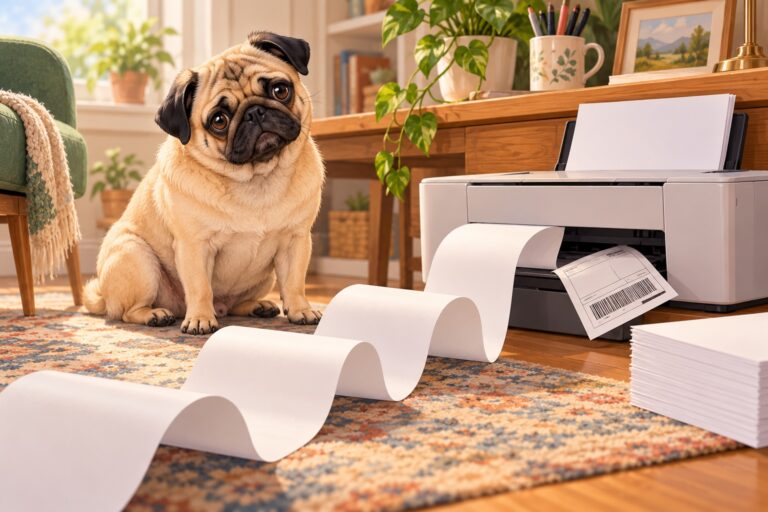
When something goes wrong, customers need a simple way to report it. Please do not make the first response another copy of the message saying the package was delivered. We saw the message. It is the very reason we are having this conversation. Repeating the tracking result does not move the box from someone else’s house to ours.
Humans can help by checking the order address, reading the delivery details, and looking in the places the carrier says to check. If it still appears misplaced, use the retailer’s or carrier’s official support process. A polite question to a familiar neighbor may make sense, but there is no reason to trespass, confront strangers, or turn a shipping mistake into an accusation.
It also helps to make your own address visible and keep any delivery instructions brief and practical. “Front door beside the blue bench” is more useful than a paragraph describing the emotional history of the neighborhood. If a building has a designated package area, check the current arrangement rather than assuming the driver knows every change.
Eventually, our fictional household mystery ends the way most small inconveniences should: with a little patience, a clear conversation, and a box reaching the right person. I would prefer that ending to arrive without an hour of automated reassurance. A good delivery system should be able to say, “We understand. Here is what happens next.”
So thank you to the people who bring useful things to our doors. We appreciate the work. We simply request that the word “delivered” include the right destination. My human wants the purchase. I want the ordinary excitement of a visitor followed by a return to my nap. Neither request should require advanced training in porch identification.