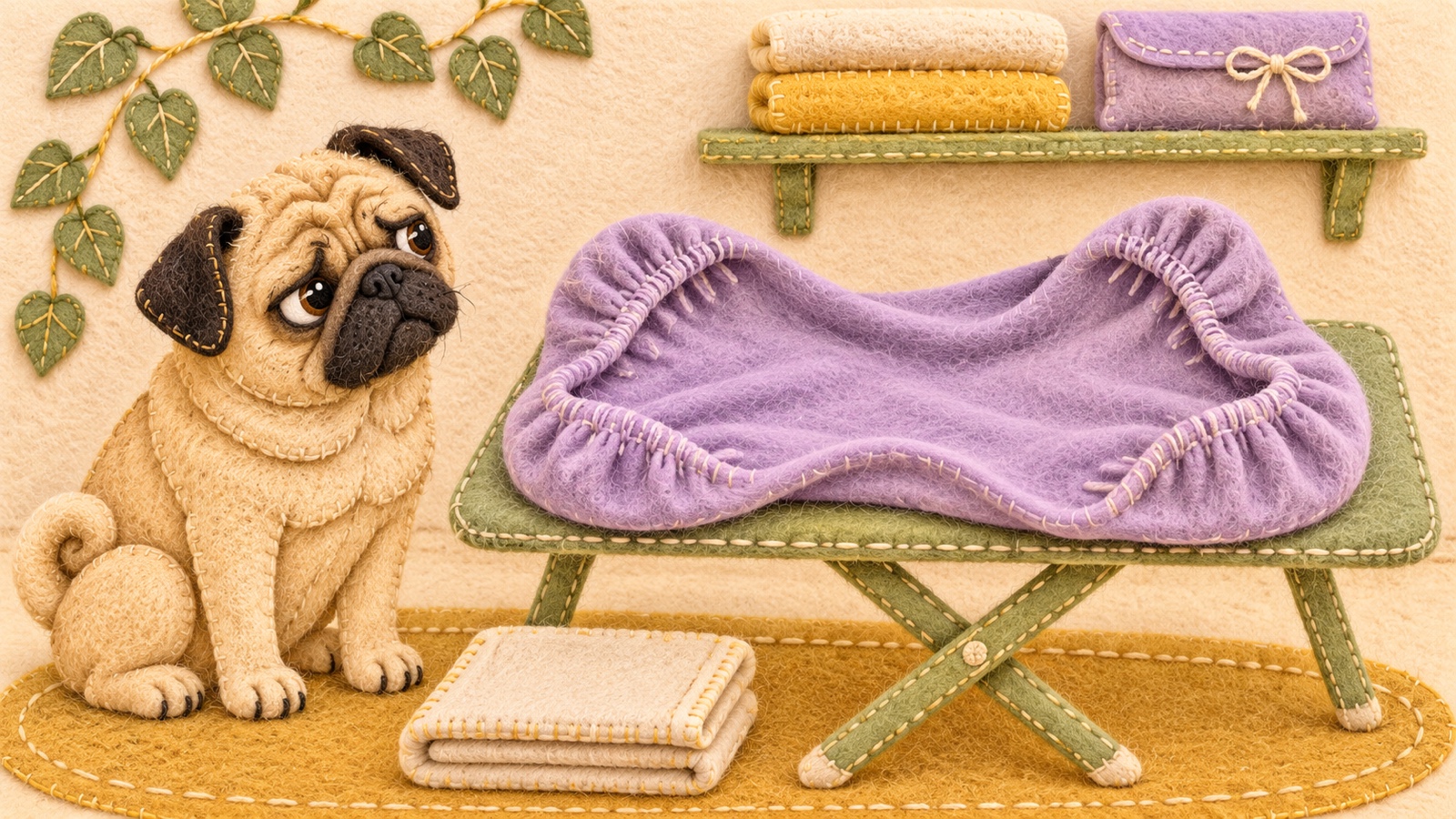

A fitted sheet is a rectangle that has retained legal counsel.
Ask it to lie neatly on a shelf, and suddenly every corner has a separate agenda. One curls inward. Another disappears into a gathering of fabric. The middle develops the confidence of a parachute.
I respect a household object with boundaries. I would still appreciate four of them that line up.
In its defense, the sheet has another job
A fitted sheet has corner seams and elastic hemming to fit around a mattress, as The Home Depot’s folding guide explains. Those features make considerably more sense on a bed than in a linen closet.
That is my interpretation of the dispute: the thing has been asked to hug a mattress and then audition as a crisp little envelope. These are different personalities.
A flat sheet seems positively smug by comparison. It arrives at the folding stage already flat. I hesitate to congratulate it too enthusiastically.
The corners need to attend the same meeting
There is an actual method beneath all this domestic geometry. The Company Store’s instructions bring the elastic corners together before turning the remaining fabric into a rectangle. Here is the short version:
- Start with the sheet inside out and a hand in each of two adjacent corner pockets.
- Bring those corners together and fold one over the other. Repeat with the other pair.
- Nest the two pairs together, then lay the sheet on a clean, flat surface. Tuck the loose edges inward to form a rectangle.
- Fold that rectangle into a bundle that fits your shelf. The guide allows thirds, quarters, or halves.
In other words, give the corners somewhere to go before demanding cooperation from the rest of the sheet.
I find this a reasonable management principle. Four corners roaming freely cannot be expected to deliver consistent rectangular results.
Watch the linked demonstration if the corner-nesting part is difficult to picture. There is no shame in consulting visual assistance for a fabric problem with this many escape routes.
Promote a pillowcase to department manager
My favorite part of this subject is the possibility of finishing it.
The Company Store also suggests putting a folded sheet set inside one of its pillowcases. The fitted sheet, flat sheet, and remaining pillowcase can stay together as a bundle.
This strikes me as excellent use of a pillowcase’s transferable skills. It already knows how to contain a soft object. A small promotion seems fair.
I would also label the shelf or bundle by bed size if similar-looking sets cause confusion. That is my practical suggestion. Pale gray does very little to explain whether it belongs on the guest bed.
The linen closet does not need a judging panel
I support learning the technique. I also support stopping when the result is useful.
My standard is clean, dry bedding that you can identify, retrieve, and put away without reopening negotiations with the entire shelf. A slightly rounded corner can remain employed.
If you enjoy making every bundle look immaculate, carry on. For everyone else, I approve of a tidy approximation. The closet door is a perfectly respectable finish line.
Gather the corners. Keep the set together. Reclaim the rest of your afternoon.
And if the sheet retains a little puffiness, I suggest being gracious. Speaking as a pug, some shapes are doing their best.