
Pug DJ’s take
A sofa that cannot get through the front door is an unusually ambitious porch decoration.
The upholstery may be lovely. The color may be perfect. The doorway remains deeply unmoved.
I propose giving the tape measure a seat on the shopping committee. It has useful qualifications: it deals in numbers, takes up very little space, and does not care what is on sale.
The room needs room to be a room
My preferred living room allows for sitting, walking, opening a cupboard, and a dignified pug turn. A furniture arrangement that requires everyone to travel sideways seems a little too committed to the furniture.
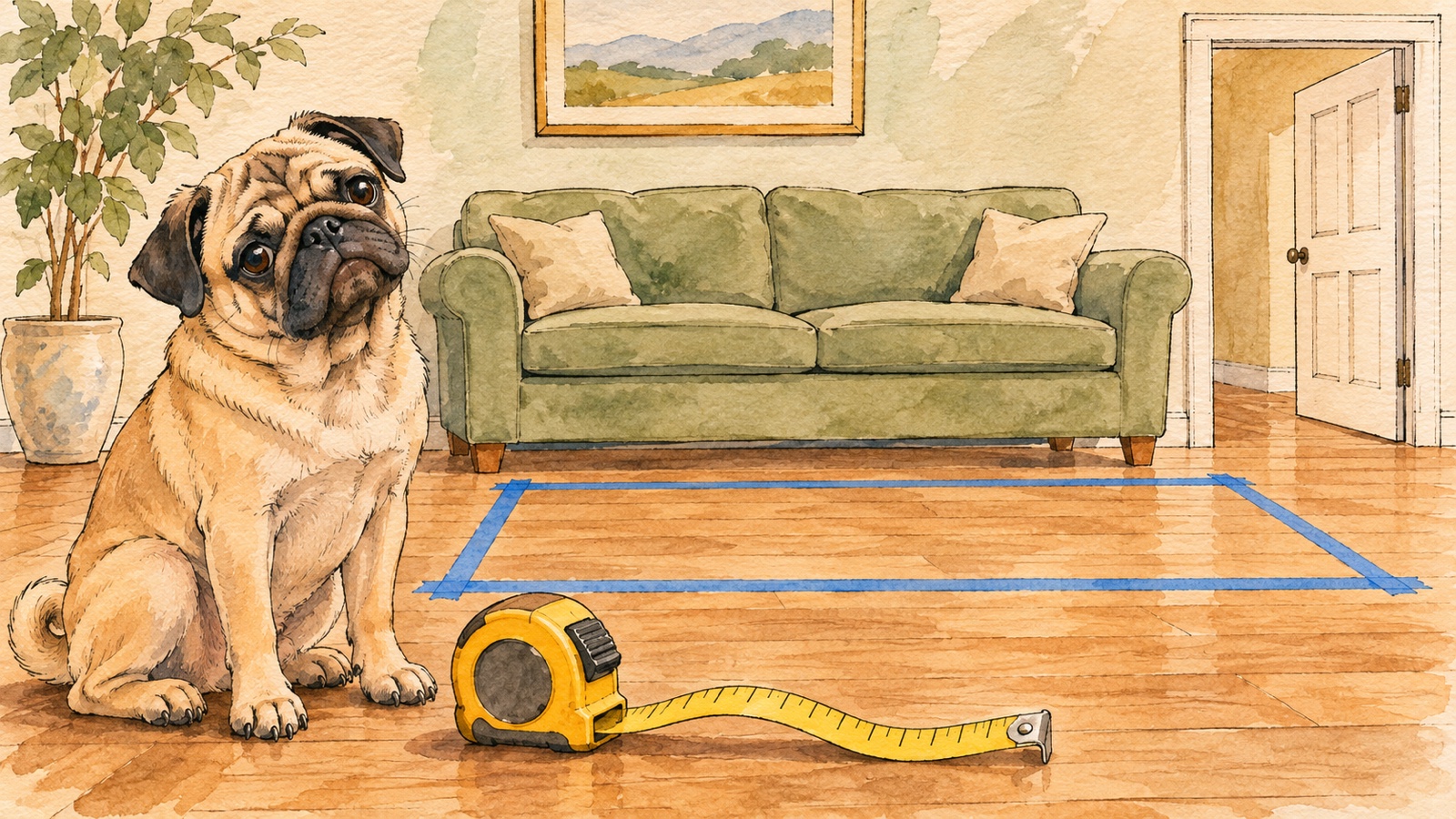
Pottery Barn’s measuring guide recommends using painter’s tape to mark a piece’s dimensions on the floor so you can consider its fit and scale in the room.
I like that idea. If the tape is suitable for your floor, let the outline audition before the sofa gets the job. Walk the routes you normally use. Consider the doors and storage you need to open. Decide whether the remaining space feels comfortable to you.
The rectangle does not need to impress anybody. Its job is to help you notice whether the coffee table has quietly taken control of the journey to the kitchen.
The front door gets a vote
The final resting place is only part of the question. Furniture also needs a way to reach it.
Pottery Barn’s guide advises measuring the interior height and width of the doorways, staircases, elevators, and hallways along the delivery route, while accounting for architectural details and low fixtures. Those are useful considerations even when you are shopping somewhere else.
My addition: give the entire route a little attention before falling in love with the final corner of the room. An elevator door, an awkward landing, or a hallway turn deserves a place in the discussion.
Determination is admirable. I would still prefer the measurements to support the plan.
Bring the details, including the boring ones
IKEA’s sofa-planning advice asks customers to record room height, width, and depth, along with the positions and dimensions of doors, windows, and electrical outlets. It also suggests bringing a drawing or photograph of the space.
That is a better committee packet than a hopeful estimate and a beautiful picture of a completely different house.
Keep the furniture’s measurements labeled, too. Width, depth, and height have different jobs. The biggest number on the product page is not qualified to represent all three.
West Elm’s delivery-measuring guide notes that some pieces have removable legs, feet, or bases. It also makes clear that the guide does not guarantee a purchase will fit.
For a tight route, ask the seller or delivery provider about the specific piece before ordering: how it arrives, which dimensions apply, and whether any relevant parts can be removed. A close call deserves a clear answer.
A small plan beats a large apology
Here is the modest shopping policy I would put forward:
- Save the product dimensions. Keep width, depth, and height together, with their units.
- Try the footprint. Consider everyday movement and access to doors and storage.
- Check the journey. Record the openings and awkward places between the delivery point and the room.
- Ask about uncertainty. Share measurements and photos with the seller when the fit looks close.
I would like new furniture to improve the house without requiring the house to develop a second entrance.
Give the tape measure a vote before the delivery truck joins the discussion.
Sources checked November 16, 2026. Opinions are Pug DJ’s.