
Dear restaurants, I am happy to support technology when it helps. A reservation app is helpful. Paying from the table can be helpful. Even a small screen that tells us our table is ready can be helpful. But the QR-code menu has gone too far when ordering a sandwich becomes a technical project.
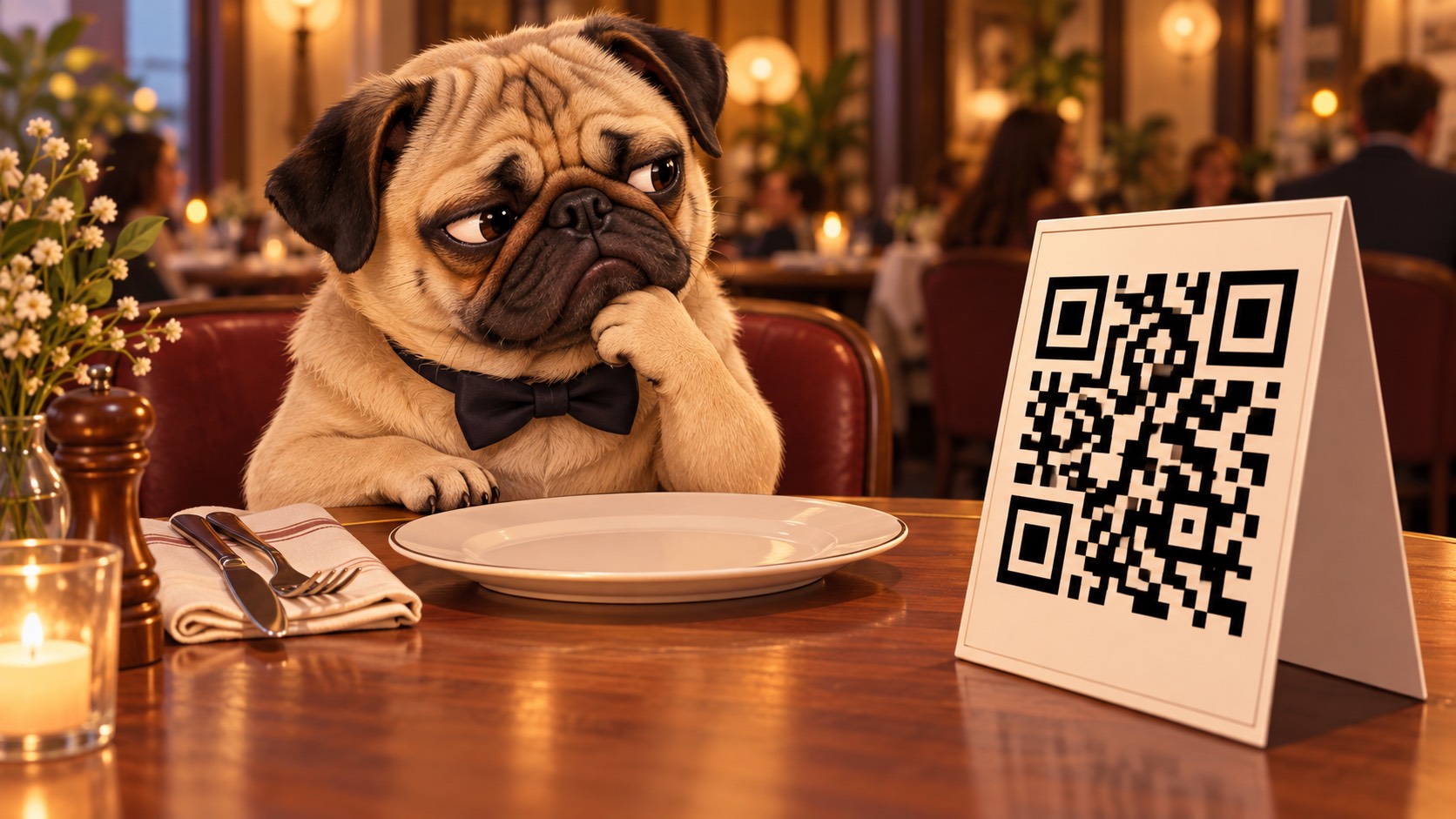
You sit down hungry. The server hands you a tiny square of black dots and says, “The menu is right there.” You point a phone at it. Nothing happens. You adjust the angle. You remove your sunglasses. You hold the phone above the table like you are trying to contact a satellite. Finally, a web page opens with tiny gray words, a pop-up about cookies, and a button that somehow leads to the restaurant’s Instagram page.
Sometimes the restaurant has weak signal. Sometimes the guest has a low battery. Sometimes an older relative does not want to bring a camera close to their soup just to learn whether the burger comes with fries. None of those people should be punished for wanting lunch.
A QR code can be an option. It can show photos, allergy details, and specials. That is fine. But please also keep a clean, readable menu that exists in the physical world. Paper menus do not need an update. They do not log you out. They do not ask permission to send notifications. They simply show food, which is their beautiful purpose.
My proposal is very small: give people choices. Put the QR code on the table, but bring a menu when someone asks. Use plain language and decent-sized type. Make the page fast. And if the menu has twelve taps before the appetizer section, consider whether the technology is serving the diner or making the diner serve the technology. A hungry pug believes the answer is obvious.
There is a practical lesson under the joke. Small everyday frustrations deserve simple fixes because people spend real time dealing with them. A better version does not need to be fancy. It just needs to be clear, fair, and useful when someone is tired or in a hurry. That is my official Pug DJ standard: fewer hoops, fewer mysteries, and more time for the parts of the day that actually matter. It is also a good test for any new idea: would this make a normal day easier for someone who is busy, hungry, carrying too many bags, or simply ready to go home? If the answer is no, it may be clever, but it is not helping. That is a useful difference for every company, app, store, and human to remember.
One last practical thought: good ideas should make ordinary days easier, not ask people to work harder for the same result. That is a standard worth keeping.