
Every family needs a lost-and-found department. I know this because my human spent yesterday looking for his glasses while wearing them. Pug DJ watched respectfully from the hallway. I considered helping, but I wanted to see how long the investigation would continue before the evidence became impossible to ignore.
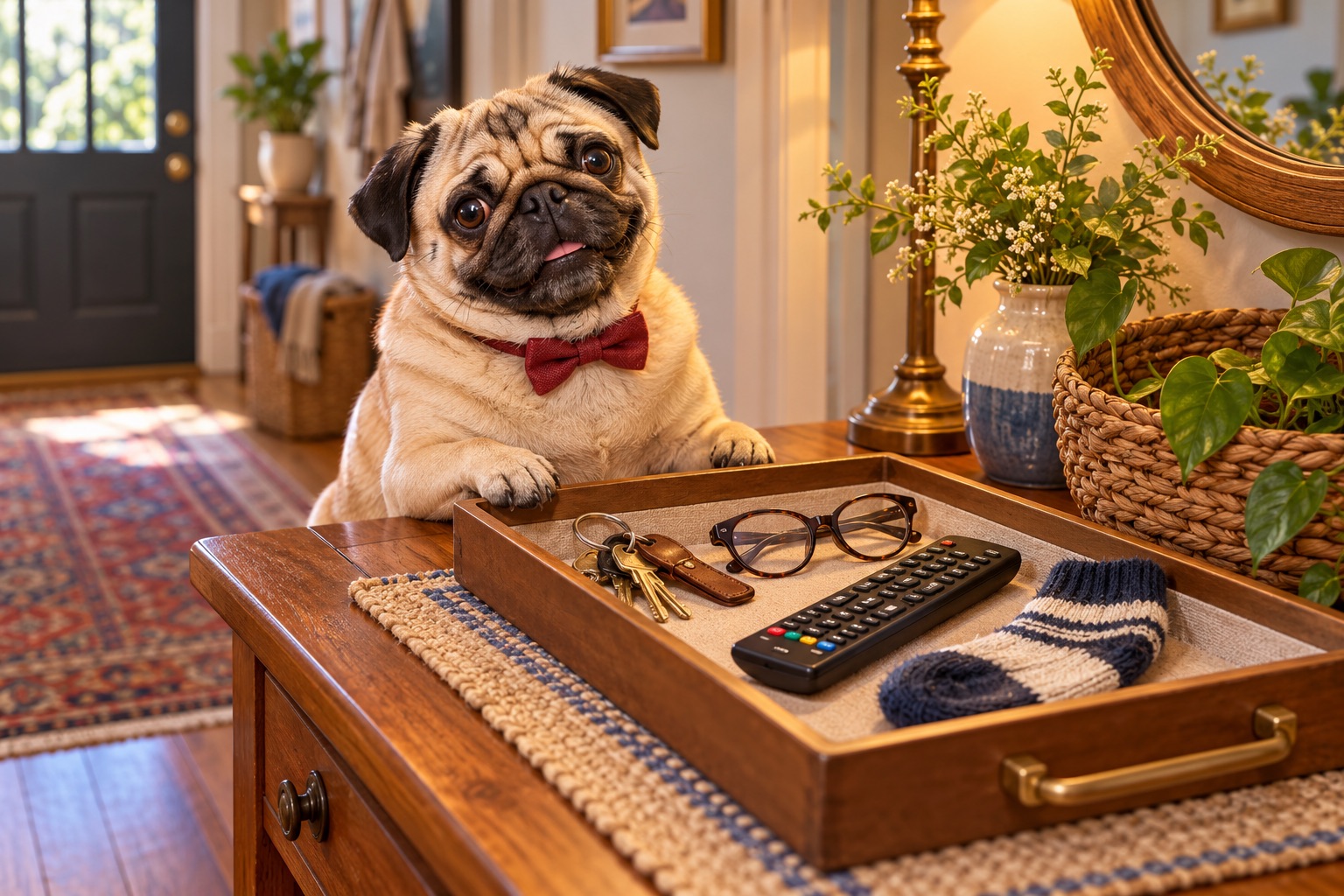
In a busy home, objects develop mysterious travel habits. Keys leave the table and appear in a jacket. The remote control explores the sofa. A phone settles beneath a folded towel. Nobody remembers moving any of these things. If you listen to the household discussion, you would think small belongings have organized a secret transportation service.
Dogs become suspects early. Somebody says, “Did the dog take it?” This is an impressive leap when the missing item is a tax document or a pair of reading glasses. Yes, I occasionally relocate a sock. I have never shown an interest in your insurance paperwork. Please consider the full range of possible explanations before questioning the pug.
My proposed department does not need an office, a badge, or an expensive set of labeled containers. One sensible basket can begin the operation. Put it somewhere people already pass. When you find a stray household item, place it there instead of hiding it in a new, personally meaningful location that no other human knows about.
The department also needs a few permanent homes for things used every day. Keys belong in one chosen spot. The remote belongs somewhere near the television. Glasses need a safe place where they will not be sat on, stepped on, or investigated by an enthusiastic puppy. These are small arrangements, but they save surprisingly large amounts of discussion.
A family should choose these locations together. If one person creates an elaborate system and everyone else finds out during an argument, that is not organization. That is a surprise examination. Keep the plan simple enough for children to understand and ordinary tired adults to follow after dinner. A system that requires a handbook is probably applying for the wrong job.
Then build a brief return habit. Before leaving a room, take one misplaced thing toward its home. When laundry is folded, check the pockets and return what turns up. Once in a while, empty the collection basket together. Otherwise, the lost-and-found department will become a museum of objects everyone has stopped expecting to see again.
Important documents, medicine, sharp items, and valuables need appropriate secure storage rather than an open family basket. My proposal concerns the ordinary wandering objects that interrupt an afternoon. Good organization should make the house easier and safer to use. It should not create a convenient new selection of interesting things for pets or small children.
Most of all, keep the tone kind. Losing a key does not mean someone has failed as a human. People get distracted. Children are learning. Adults carry a great deal in their heads. Helping someone find a missing object is usually more useful than delivering a speech about the last time they lost something. I have listened to those speeches. They rarely locate the remote.
Our department’s mission is modest: less searching, less blaming, and more time for the people who live here. I am willing to serve as honorary supervisor, provided the position includes a comfortable rug. If something still disappears, begin with the basket, the usual places, and a calm question. And before announcing that your glasses are gone, please check your face. Respectfully, Pug DJ.