
Pug DJ’s take
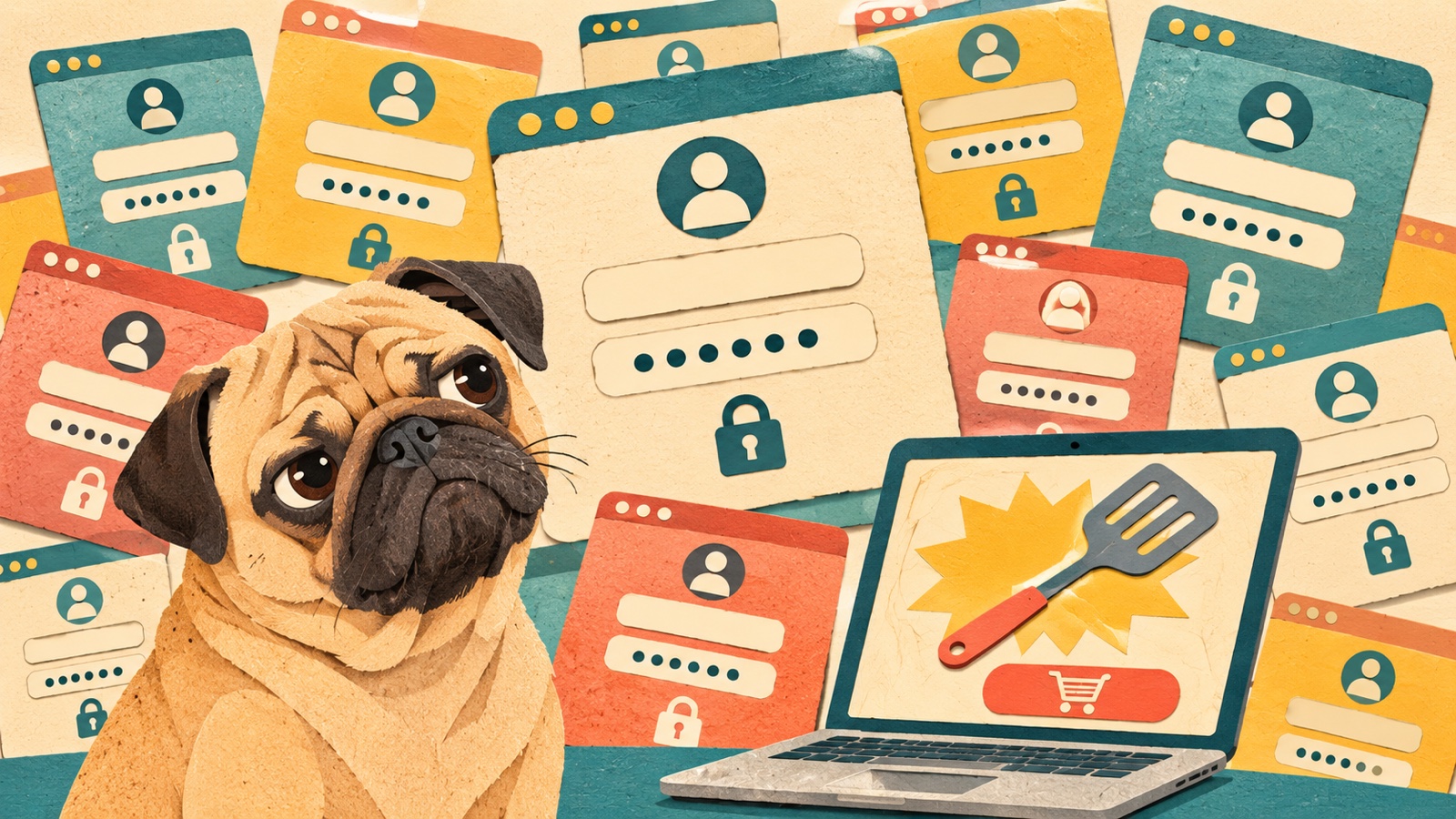
Buying a spatula should not require a long-term relationship.
An email address. A password. A verification code. A decision about promotional messages. Somewhere in this growing pile of obligations, there may still be a kitchen utensil.
I am a pug. Even I think that is too much commitment for something that flips pancakes.
Some stores really do require it
As checked on November 15, 2026, Target’s checkout instructions say customers must sign in to a Target account to proceed with checkout on its website or app.
Other retailers provide a guest route. Best Buy’s help page specifically explains how people who purchased online as guests can retrieve a receipt using their order details.
Different stores, different approaches. Account requirements are worth checking before you buy, because policies can change.
My preference is simple: let a customer decide whether this purchase needs an ongoing relationship. A spatula should have fewer administrative requirements than a passport.
An account should earn its keep
If an account makes a store you use regularly easier to deal with, wonderful. Keep it. Convenience is a perfectly respectable reason to sign up.
But for a shop you might visit once, I think the benefit should be worth the extra login you will have to manage. A discount you actually want might qualify. The privilege of completing a purchase feels like a rather thin membership package.
I am in favor of businesses earning a return visit by doing a good job. Sell something useful. Describe it honestly. Make buying it straightforward. That is an excellent foundation for affection, even before the welcome email arrives.
And if you offer guest checkout, please make it easy to find. It should not require the investigative instincts of a pug near an unopened snack bag.
Your information belongs in the decision
There is a practical consideration underneath the grumbling. The Federal Trade Commission’s online-shopping guidance says shopping websites and apps may collect contact details and information about purchases. It recommends checking how a service uses, shares, and protects your information before deciding to use it.
That general guidance does not establish what any particular retailer does with your data. For that, read the retailer’s own policy.
Guest checkout still involves sharing information for the order. I would treat it as one fewer login to manage, rather than an invisibility cloak.
My view: a company asking for your time and information should explain the benefit plainly. Customers should be able to weigh that offer without feeling as though declining it is a character flaw.
A little less fuss, starting here
No grand digital uprising is required. Try a few modest acts of administrative self-respect:
- Look for guest checkout. When it is offered and suits the purchase, consider using it.
- Give an account a reason to exist. Ask whether you expect to return and whether its benefits are useful to you.
- Make deliberate marketing choices. Decline optional promotional messages when you do not want them. A discount is worth considering; so is your attention.
- Protect the accounts you keep. The FTC recommends strong passwords and two-factor authentication, and explains how a password manager can create and save strong passwords.
- Keep your purchase records. The FTC’s shopping guidance recommends keeping receipts, order details, and communications with the seller.
Make the purchase easy, respect the customer’s choice, and trust a good experience to do some of the persuading.
And please, let a spatula be a spatula.
Factual examples and guidance checked November 15, 2026. Opinions are Pug DJ’s.