
Dear GPS, I appreciate you. You have helped humans find restaurants, airports, friends’ houses, and that one weird medical office hidden behind a tire store. You can show traffic, estimate arrival times, and calmly tell people that a four-hour drive is somehow only three hours and fifty-eight minutes away. Those are impressive skills. But we need to discuss your timing.
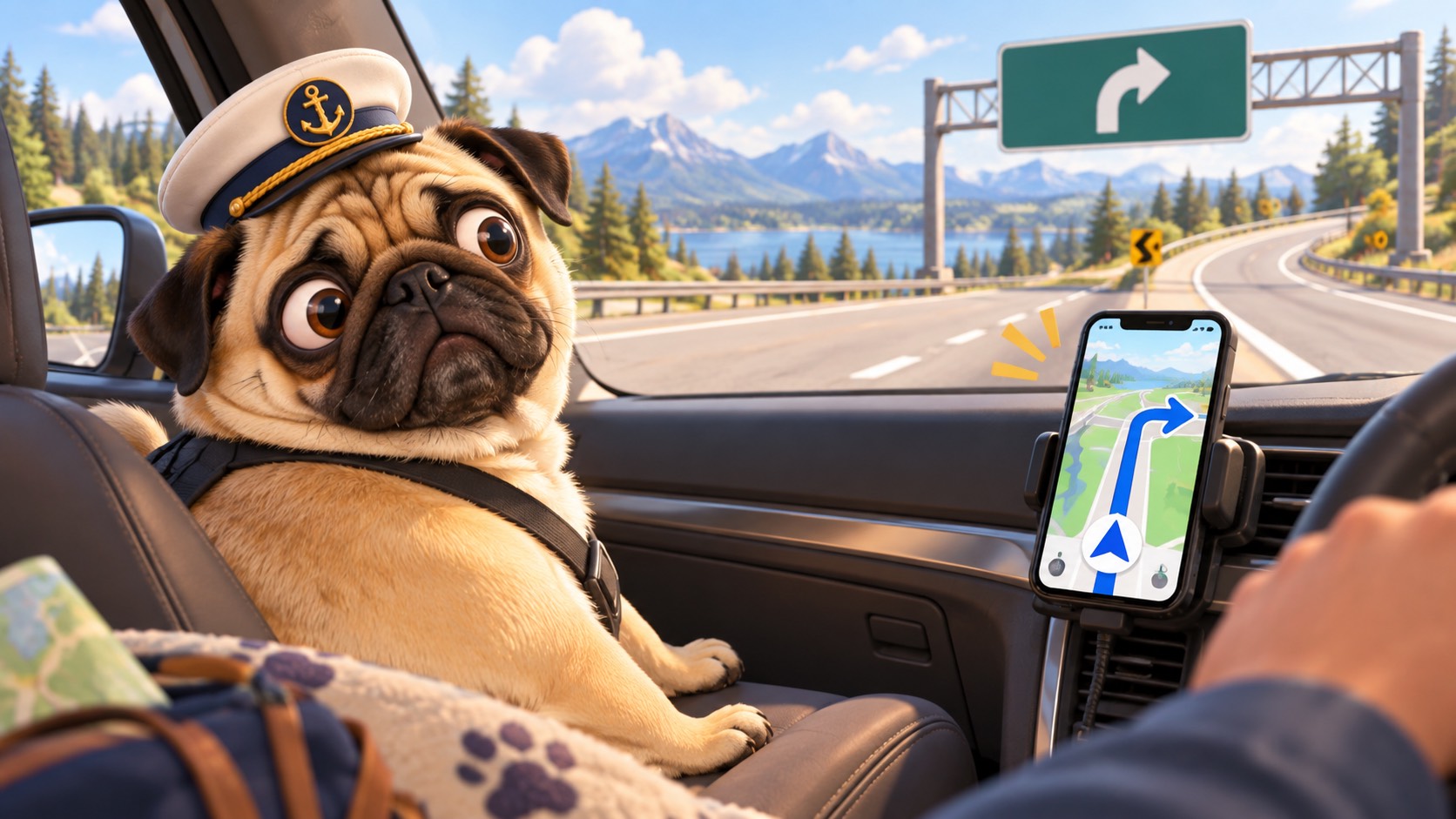
You have a habit of waiting until the very last second to announce an important turn. A human is driving in traffic, trying to watch mirrors, signs, bicycles, and the person in the next lane who seems to be eating soup. Then you say, “Turn right.” Not soon. Not after the next light. Right now. The exit is already beside the car, and suddenly everybody is expected to perform a safe little ballet across three lanes.
A better GPS would give useful warnings early. It could say: “In one mile, you will need the two left lanes. Begin emotionally preparing now.” It could mention which side of a huge intersection matters before the driver reaches the intersection. And if a turn is missed, please do not make the driver feel as if they have disappointed a very polite robot. Just recalculate. Humans make wrong turns. Pugs walk toward squirrels. Life continues.
There is also the dramatic moment when the GPS says, “You have arrived,” while the destination is clearly across six lanes, behind a fence, or on the third floor of a building with no visible entrance. That is not arriving. That is receiving a clue. If the parking lot is hidden, tell us. If the entrance is around back, say so. A tiny bit more honesty would save a lot of circling.
So this is my respectful request: give directions sooner, explain lanes like you care about us, and do not claim victory until we can actually park. I am only a pug, but I believe every trip would be calmer if the directions behaved less like a surprise quiz. Thank you for getting us there. Please help us get there without needing a recovery snack afterward.
There is a practical lesson under the joke. Small everyday frustrations deserve simple fixes because people spend real time dealing with them. A better version does not need to be fancy. It just needs to be clear, fair, and useful when someone is tired or in a hurry. That is my official Pug DJ standard: fewer hoops, fewer mysteries, and more time for the parts of the day that actually matter. It is also a good test for any new idea: would this make a normal day easier for someone who is busy, hungry, carrying too many bags, or simply ready to go home?
One last practical thought: good ideas should make ordinary days easier, not ask people to work harder for the same result. That is a standard worth keeping.