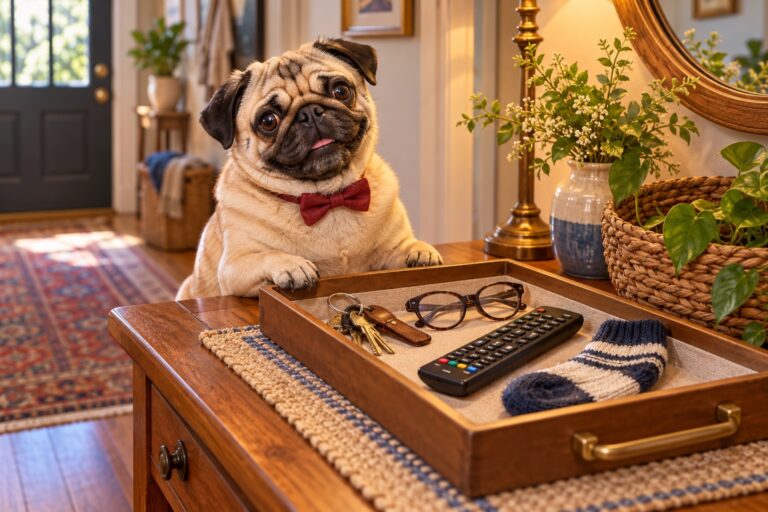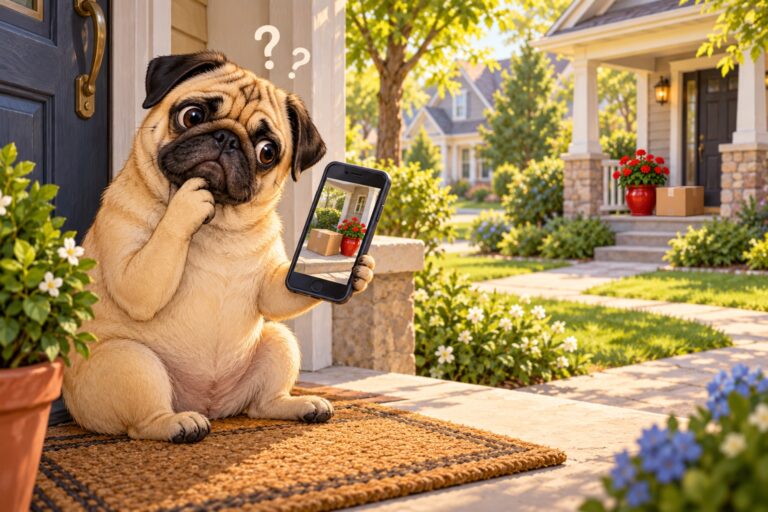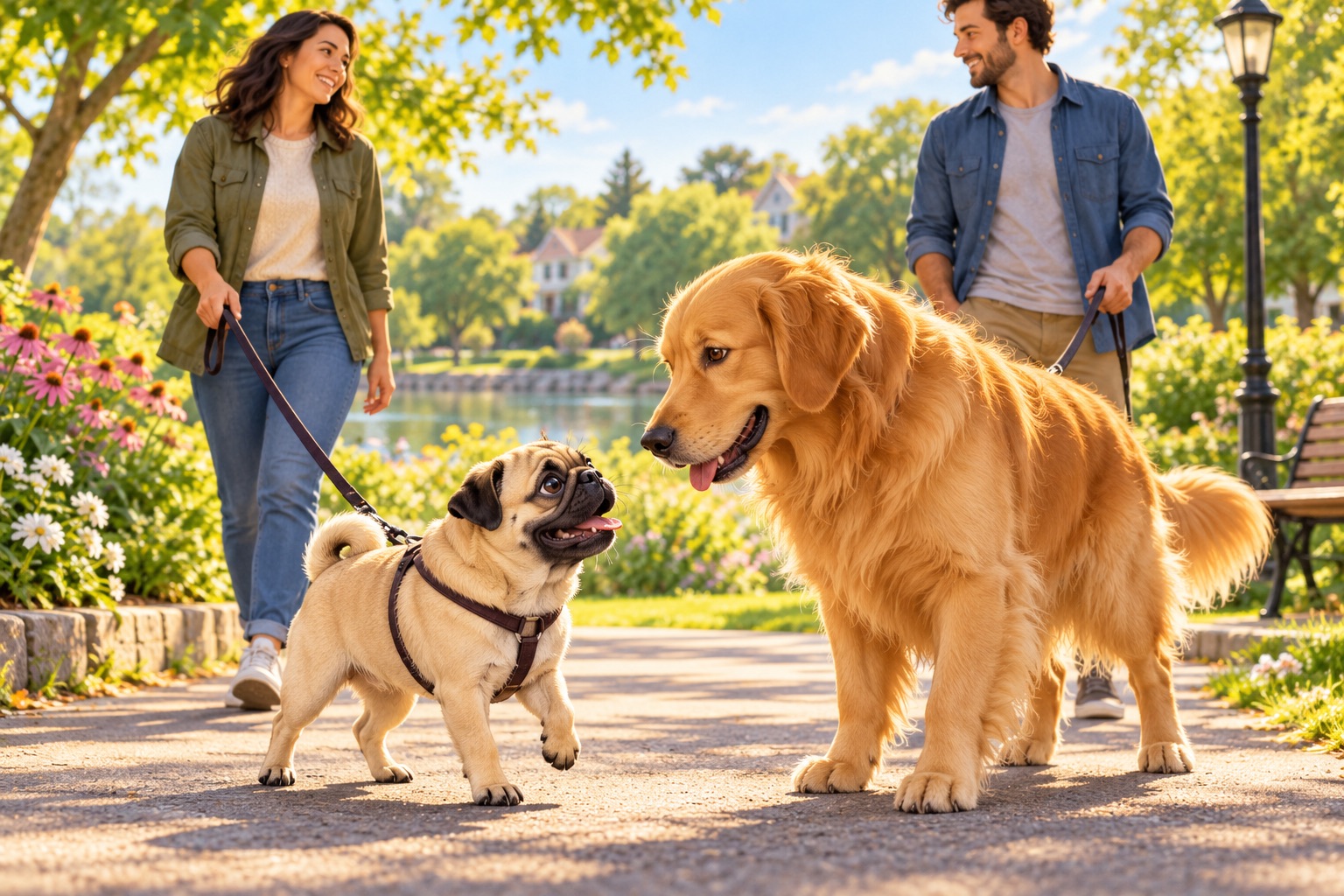

Pug DJ has noticed that humans can make friendship complicated. You wonder whether to send a message, whether the message sounded strange, and whether the other person noticed that you waved before realizing they were waving at somebody behind you. Dogs have awkward moments too. We simply recover faster, usually by becoming interested in a nearby tree. Here are seven lessons worth borrowing.
First, act glad to see people. A warm greeting can change the feeling of an ordinary day. You do not need to bounce through the doorway or accidentally knock over an umbrella stand. Just look up, say hello, and let the person know their arrival matters. Dogs have built entire reputations on being pleased that somebody came home.
Second, pay attention. When a friend is speaking, give the conversation some room. A phone can wait while somebody finishes a story. Dogs are excellent at noticing where your attention goes, especially if it goes toward the refrigerator. Humans can practice the same alertness without staring quite so intensely at anyone’s sandwich.
Third, enjoy simple time together. Friendship does not require a perfect restaurant, an expensive outing, or a schedule impressive enough to photograph. A walk, a cup of coffee, or an ordinary visit can be enough. Some of the best company happens when nobody is trying to produce an event. Dogs understand the value of simply being nearby.
Fourth, make room for differences. Your friend may be quieter, older, louder, or interested in things you would never choose for yourself. You can share kindness and good company without pretending to agree about everything. Being respectful does not require setting aside your convictions. It means remembering that the person in front of you deserves patience and honest care.
Fifth, respect boundaries. Not every dog wants a greeting, and not every person is ready for a long conversation. Give people space when they need it. Ask before making demands on their time. A friendly invitation leaves room for a polite no. Enthusiasm becomes much more pleasant when it remembers that someone else has a schedule and a front door.
Sixth, show up consistently. Grand gestures can be lovely, but friendship usually grows through smaller habits. Return the call. Remember the appointment they were worried about. Offer help when you can follow through. Keep a promise. A dog waiting faithfully near the door is a useful reminder that ordinary dependability has a warmth all its own.
Seventh, be willing to begin again after small mistakes. Someone forgets a message. A joke lands badly. Plans get confused. Honest apologies and appropriate forgiveness can keep a small stumble from becoming a permanent wall. That does not mean ignoring serious wrongdoing. It means allowing ordinary imperfect people the chance to make an ordinary imperfect moment right.
There is one important limit to this comparison. Humans should not copy every dog habit. Please do not sniff a new acquaintance, bark across a meeting, or settle a disagreement by carrying a shoe into the yard. The useful lesson is the spirit of welcome, attention, and steady companionship. Leave the stranger parts to qualified canine professionals.
Good friendships are a gift, and they deserve some tending. Start with somebody you already know. Send the thoughtful message. Ask a real question. Take the walk you keep postponing. You do not need a large circle to practice being a good friend. A little warmth, honesty, and faithful effort can make a meaningful difference. Pug DJ recommends beginning with a friendly hello. The tail wag is optional.