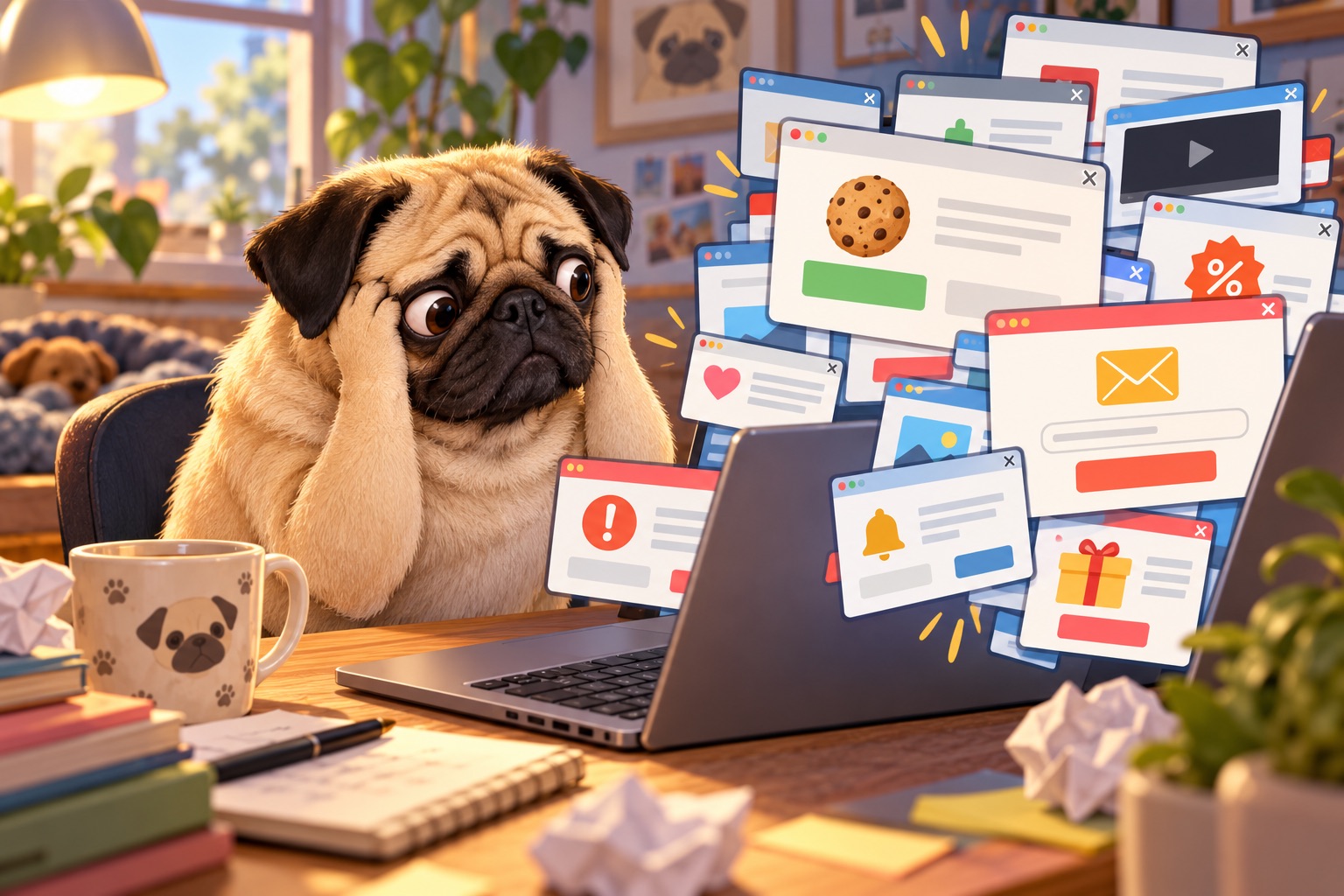

Dear websites, Pug DJ here. I clicked a link because I wanted to read something. That was the entire plan. No complicated mission. No special equipment. Just a pug, a screen, and one small question about why the dishwasher smells funny. Somehow, before I reached the first sentence, I had been invited to subscribe, accept cookies, watch a video, enable notifications, and join a community. Friends, I have not even decided whether I like your paragraph.
The first visitor was the cookie banner. As a pug, I was briefly delighted. Cookies are an excellent way to begin a relationship. Unfortunately, these cookies were not the kind you can eat. They were the kind that require a small meeting about preferences. I appreciate having choices about privacy. I would also appreciate choices that fit on one clear screen, with ordinary words and buttons I can actually find.
Then came the newsletter invitation. It asked whether I wanted useful tips delivered straight to my inbox. Perhaps. But I had arrived twelve seconds earlier. This is like entering a restaurant and being asked to sign up for weekly updates before anyone lets you smell the soup. Let me see what you have first. If your writing helps me, I might gladly come back for more.
Next, a video started playing in the corner. I closed it. It moved. I scrolled. It followed. This tiny television had developed the determination of a pug who knows somebody is holding cheese. Somewhere underneath it was the information I came to read. I began wondering whether the article had become a reward for completing an obstacle course.
I understand that websites need money. Writers deserve to be paid. Hosting, photographs, editing, and keeping everything working are real jobs. A useful website does not appear because somebody sprinkled keyboard crumbs onto the internet. Advertising and subscriptions can support good work. My complaint is about how much interruption one visitor is expected to tolerate before that good work becomes visible.
Imagine if a library worked this way. You open a book, and someone drops a shopping flyer across the page. You move it, and a second person asks for your email address. A third follows you down the aisle reading an advertisement aloud. Finally, a cheerful sign asks whether you are enjoying your visit. The librarian would have a very difficult afternoon.
Here is my modest proposal. Show the article. Make any privacy choices clear and easy to understand. Keep advertisements from covering the words. Let videos stay quiet unless someone asks to watch them. Offer the newsletter after the reader has had a fair chance to enjoy the page. And if you provide a close button, make it large enough for a human finger instead of a highly trained mosquito.
Please remember visitors using small phones, older eyes, or slower connections. A page that feels merely annoying on a big computer can become nearly impossible on a little screen. Making something readable is a way of showing respect for the person who took time to visit. That person could be your next regular reader, customer, or friend.
You do not need to invite me into a long-term relationship before answering my first question. Be helpful. Be clear. Give me a reason to trust you. The internet already contains enough noise to keep every neighborhood dog barking until Thursday. A calm, useful page can stand out simply by letting people finish a thought.
Now, if you will excuse me, I still need to learn about that dishwasher. I have closed seven windows, rejected three invitations, and accidentally opened an advertisement for patio furniture. I would like my paragraph now. And if you genuinely have cookies, please put those in a separate, clearly labeled offer. Pug DJ is always willing to review a sensible proposal.