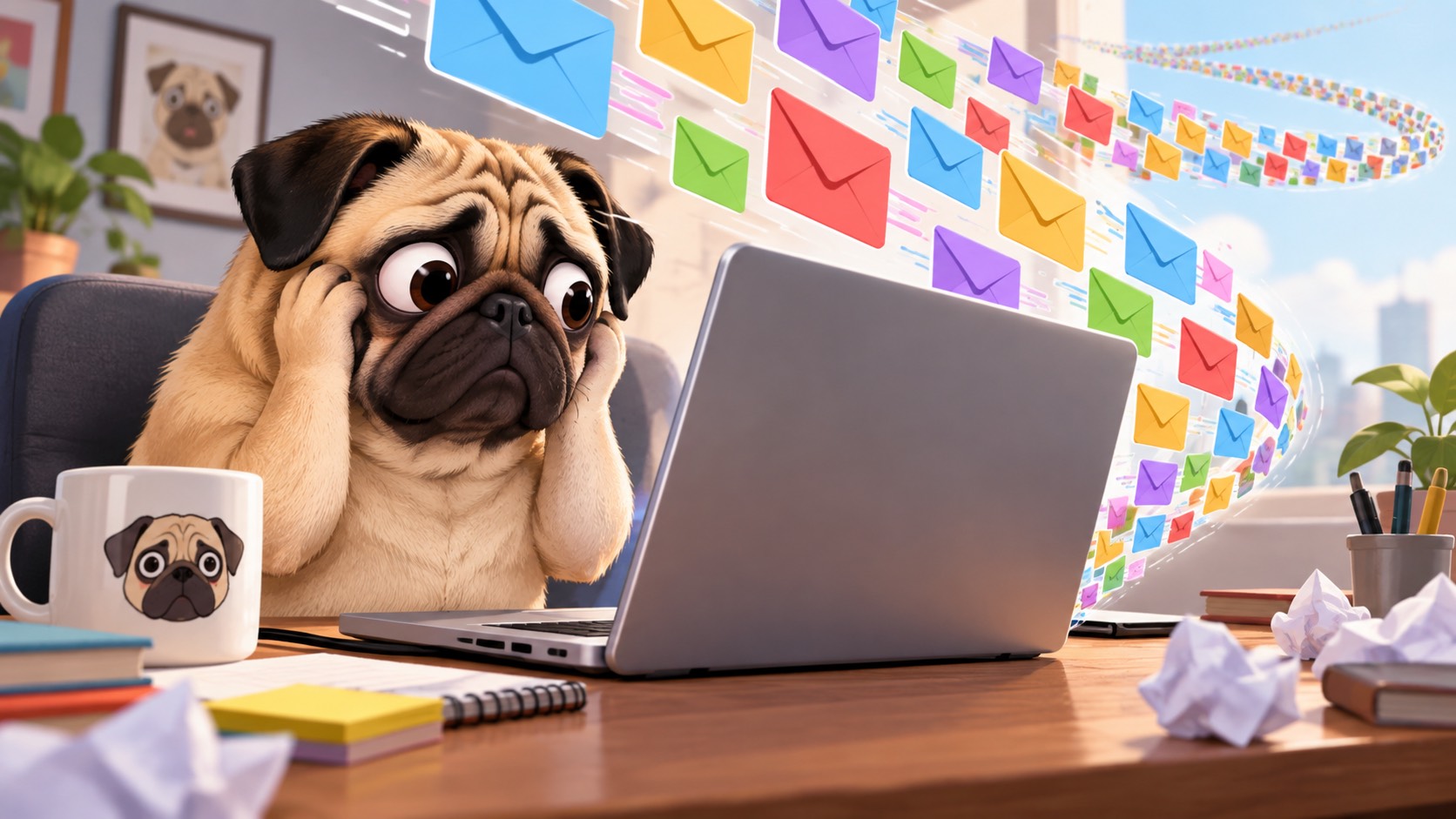

There are buttons that deserve respect. The delete button deserves respect. The send button deserves respect. But the Reply All button deserves a tiny warning label, a safety helmet, and maybe a person standing nearby asking, “Are you absolutely certain?”
Reply All begins with good intentions. A group receives information, and someone needs to answer everyone. Fine. But then somebody replies “Thanks!” to forty people. Another person asks a question that only one person can answer. A third person says, “Please remove me from this list,” which naturally sends the message to the entire list. Before long, everybody has twenty new emails and no idea why.
The worst part is that Reply All creates its own weather system. One message arrives. Then more messages gather. A storm forms. People start replying not to the original topic but to the fact that people keep replying. It is like watching a shopping cart roll downhill while everyone politely comments on it.
A simple rule would help: before pressing Reply All, pause for three seconds. Ask whether every person on the list needs this exact message. If the answer is no, reply to one person. If the answer is “I just want to say thank you,” consider saying it the next time you see them. Your gratitude is lovely. It does not need to wake up an entire department.
Email is supposed to save time. Let us not turn it into a group project nobody assigned. Use Reply All when it truly helps the group, and use regular Reply when the message belongs to one human. That tiny decision may not feel heroic, but it prevents a lot of inbox clutter. A pug appreciates any invention that leaves more time for naps.
There is a practical lesson under the joke. Small everyday frustrations deserve simple fixes because people spend real time dealing with them. A better version does not need to be fancy. It just needs to be clear, fair, and useful when someone is tired or in a hurry. That is my official Pug DJ standard: fewer hoops, fewer mysteries, and more time for the parts of the day that actually matter. It is also a good test for any new idea: would this make a normal day easier for someone who is busy, hungry, carrying too many bags, or simply ready to go home?
One last practical thought: good ideas should make ordinary days easier, not ask people to work harder for the same result. That is a standard worth keeping.